
LICENSED INDEPENDENT COMMERCIAL BROKER | JASON LOPEZ | FL LIC #G280136
Commercial Property Insurance in Florida
Your Building, Equipment, Inventory and Business Property
In Florida, the deductible structure and how the policy treats wind or named-storm losses can matter just as much as the premium.
If you are comparing commercial property insurance in Florida, this page explains what the policy can protect, where separate coverage may be needed, and why deductibles and valuation matter so much when a loss occurs. I am Jason Lopez, an independent commercial insurance broker in Miami.
What Commercial Property Insurance Covers
Commercial property insurance can protect the physical property your business depends on, including a building you own, business equipment, inventory, furniture, machinery, computers, supplies, and certain improvements or property you are responsible for under a lease. The exact property covered depends on the policy and how the property is scheduled or described. NAIC specifically identifies buildings, inventory, equipment, furniture, machinery, computers, and other business property as common commercial-property exposures.
Business income or business interruption coverage may also be included or added, depending on how the policy is written. It can help replace lost income and certain continuing expenses when operations are suspended because of a covered property loss. It should not be assumed to be included automatically, which is why I review that part separately.
For some businesses, property coverage and
general liability coverage may also be packaged together in a
Business Owner’s Policy.
What It Does Not Cover
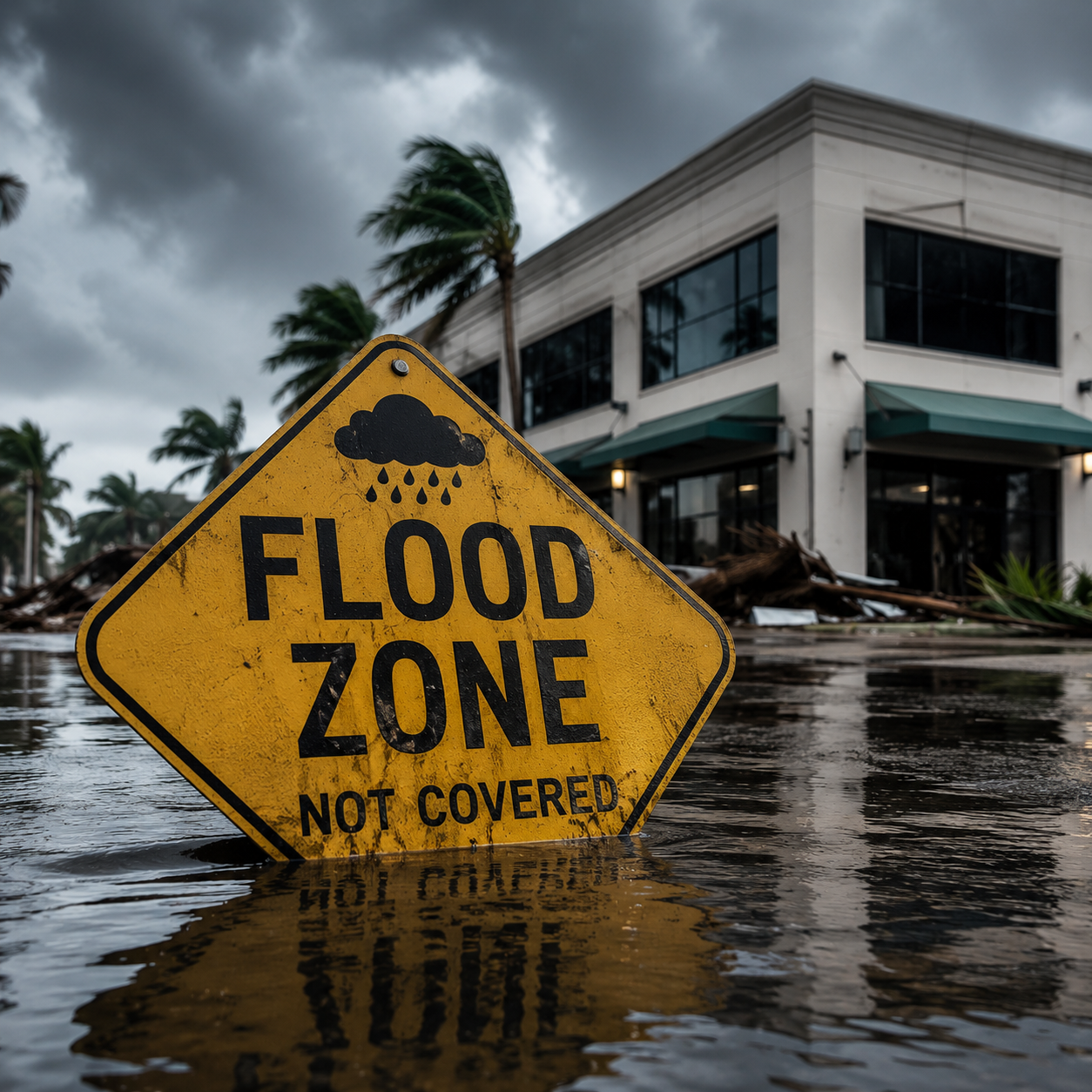
Commercial property insurance does not cover every cause of loss, and flood is one of the most important exposures to review separately in Florida. Standard commercial property coverage generally does not provide flood protection unless flood coverage is specifically added or purchased separately. FEMA administers the National Flood Insurance Program, and private flood coverage may also be available depending on the property and market.
Storm losses can also involve more than one cause of damage, which is why the policy language matters. Wind, water intrusion, flooding, deductibles, exclusions, and the cause of the actual damage can all affect how a claim is evaluated.
A storm loss may involve more than one policy or adjuster, depending on the causes of damage and the coverage purchased. The applicable policy language controls.
Wind, Named Storms, and the Deductible Nobody Reads
Florida commercial property policies can use separate windstorm, hurricane, or named-storm deductibles. These deductibles may be expressed as a percentage rather than a flat dollar amount, depending on the policy.
That difference matters. A 2% deductible applied to $1 million of insured value would equal $20,000, which is very different from a $2,500 flat deductible.
Before binding coverage, I want to know what deductible applies, what value the percentage is based on, whether it applies by building or occurrence, and which types of storm loss trigger it. Those details can materially affect how much the business has to absorb before insurance responds.
That number can have a major effect on whether a loss exceeds the deductible and how much the business ultimately absorbs. Ask what your named storm deductible is, ask what value it applies to, and ask whether it applies per building or per occurrence.
Commercial Property Insurance for Miami-Area Businesses
South Florida businesses face property concerns that deserve more than a quick premium comparison. Building values, tenant improvements, equipment, inventory, wind exposure, deductibles, and flood risk can all affect how a property policy should be structured.
I work with businesses throughout the Miami metro, and in the
other states where I am licensed, and I review the policy details that matter before a loss occurs, not just the number at the bottom of the quote.
Frequently Asked Questions
If I lease my building, what property am I responsible for insuring?
Your landlord typically insures their building, but that does not mean your business property is covered. Equipment, inventory, furniture, computers, machinery, and improvements you paid for may be your responsibility. I also look at the lease because it can spell out exactly what you agreed to insure.
How do I know whether my building, equipment, or inventory is insured for enough?
The number should reflect what it would realistically cost to repair or replace the property under the terms of the policy. Values that have not been updated for several years can become a problem when construction costs, equipment prices, or inventory levels rise. I would rather review the values before a loss than discover the shortage afterward.
What is the difference between replacement cost and actual cash value?
Replacement cost generally looks at the cost to replace damaged property with comparable property, subject to the policy terms. Actual cash value typically accounts for depreciation. That difference can materially affect what you receive after a claim, so I want you to know which valuation method your policy uses before you buy it.
Will commercial property insurance replace my income if I cannot operate after a covered loss?
It may if the policy includes business income coverage and the loss meets the policy requirements. The important question is not simply whether business income appears on the policy, but whether the limit and restoration period make sense for how long your business could realistically be disrupted.
Are all storm and water losses covered the same way?
No. Different causes of loss can be subject to different coverage terms, deductibles, exclusions, or separate policies. Wind, named storms, flooding, and water damage are not interchangeable insurance terms. I review those distinctions with you because the deductible and cause of loss can matter just as much as the property limit.
What Would It Cost to Replace What Your Business Depends On?
Tell me about the building, equipment, inventory, or tenant improvements you need to protect. I’ll help you compare the available property coverage, deductibles, and valuation options before you choose a policy.